Email Marketing Insights & Best Practices Hub

email marketing 0429

Email Marketing: Attracting New Customers, Increasing Bookings, and Boosting Revenue

Introduction

In the competitive world of luxury hospitality, standing out and delivering personalized experiences to guests is paramount. Email marketing, with its precision and customization capabilities, offers an exceptional tool for luxury hotels and resorts to enhance guest engagement, boost bookings, and increase overall revenue.

1. Direct and Personalized Communication

Email marketing allows luxury hospitality brands to communicate directly with potential and returning guests, providing a platform for personalized messaging that resonates with the individual preferences of each recipient. This personalized approach is particularly effective in the luxury sector, where exclusivity and customization are key drivers of customer loyalty and satisfaction.

2. Cost-Effective Marketing with High ROI

Compared to other marketing channels, hotel email marketing is remarkably cost-effective, offering a high return on investment (ROI). Luxury hotels can reach a large audience at a relatively low cost, making it an ideal strategy for maximizing marketing budgets while still achieving significant impacts.

  • Statistical Insight: According to industry reports, email marketing yields an average return of $42 for every dollar spent, making it one of the most effective marketing tools available.

3. Enhancing Guest Experiences with Timely Offers

Email marketing enables luxury hotels to send timely, relevant offers that enhance the guest experience. Whether it’s a last-minute deal on a room upgrade or an exclusive invitation to a private event, these offers can make guests feel valued and special, encouraging more bookings and higher revenue.

  • Example: A luxury boutique hotel in New York City, Public Hotel offers exclusive spa package deals to their email subscribers, enhancing guest experiences and increasing on-site spending.

4. Strengthening Brand Loyalty

Through regular updates and carefully curated content, email marketing helps luxury hospitality brands stay top-of-mind with their clients. This consistent engagement not only helps in maintaining a connection with past guests but also strengthens brand loyalty and advocacy.

  • Strategy: Monthly newsletters featuring behind-the-scenes content, upcoming events, and guest testimonials to keep the brand connected with its clientele.

5. Measurable Results and Data-Driven Decisions

One of the greatest advantages of email marketing is its measurability. Luxury hospitality businesses can track open rates, click-through rates, and conversions from each campaign, providing valuable insights that help refine strategies and improve future communications.

  • Practical Tip: Use A/B testing on email campaigns to determine the most effective subject lines and email content for your target audience.

Conclusion

For luxury hospitality businesses looking to enhance their customer engagement, increase bookings, and drive revenue, email marketing is not just a tool—it’s a strategic asset. With its ability to deliver personalized, cost-effective, and timely communications, email marketing stands out as a crucial component of any successful marketing strategy in the luxury hospitality industry.

Back in the 1800s, Charles Darwin, an English naturalist, extensive traveler and avid beard enthusiast, coined the term “natural selection.” Science has since accepted it as one of the mechanisms of evolution whereby nature kills off the dumbest of critters while the smartest (Galapagos finches who invest in all-natural beak enhancements, perhaps) survive.

Common marketing mistakes that hurt campaign performance and ROI

But unlike animals, who just do what animals do and let the evolutionary chips fall where they may, people do a lot of stupid stuff. Thanks to the glory of the Internet, there are even websites where you can read and watch it all. Take for example the Darwin Awards. Spend a few minutes there and you may think twice before riding without a helmet, spray-painting your face gold, or spot welding a gas tanker. However, these imprudent tales will not deter you from royally screwing up your marketing. Email marketing is one area where small, avoidable mistakes can cause outsized damage. Poor targeting, bad data, and sending to the wrong addresses can quickly undermine campaigns before strategy or creativity ever have a chance to work.

Consider the following mistakes we’ve deemed the stupidest—and learn how to avoid them.

1. Believing “More” is Always “Better”

If you have more money than Carlos Slim, who is the richest man in the world, then by all means spend your marketing dollars on high-priced television, radio and print media ads. Why not, you have plenty of cash to burn. You’ll feel cool. Your Call of Duty buddies will think you’re cool. But the rest of us will think your not that cool because your wasting your money. In the majority of cases, success is not about spending more—it’s about spending smarter. Spending smarter in email marketing starts with list quality. Sending to outdated, unwanted, or high-risk addresses wastes budget and introduces unnecessary risk regardless of how compelling the offer or design may be.

Whether you’re running a mom and pop shop or a Fortune 500 company, you can best access today’s diverse audiences through highly targeted digital marketing campaigns. From web-based ads to email marketing campaigns, these tools are effective, affordable and Darwin approved.

2. Pulling the Lever

Marketing is not like playing a slot machine in Vegas. There’s a lot more to it than dropping in quarters and pulling a lever. If you think you can invest a few bucks, send one email or place one ad, and then sit back with your proverbial bucket ready for a deluge of winnings, you’re not the sharpest tool in Darwin’s shed.

Successful marketing requires planning and development, careful implementation, consistency, repetition and constant change. A well crafted strategy is essential. And that strategy can’t be managed like a bad case of diarrhea. If it sounds like too much to handle, use the brains your mama gave you and outsource your campaign to a managed email marketing service company.

3. Failing to Measure

Every man has measured how tall he is at one time or another—even though most women will tell you that size is not important. It has nothing to do with your height and little to do with attraction. If genetics provided you with an average or even less than average height, natural selection will not lead to the eventual extinction of your family line.

However, failing to measure the results of your marketing efforts could damage your business. Make sure you have a plan in place to track the number of responses and actual sales any advertisement generates. Compare approaches and you can avoid wasting marketing dollars on duds.

4. Cutting the Budget

The experts keep telling us that the economy is improving. Unemployment is holding steady. Home prices are increasing, and men are buying new underwear. However, we understand that many small businesses are still feeling the pinch of the recessions slow recovery. Unfortunately, when executives tighten their belts, they often slash marketing budgets.

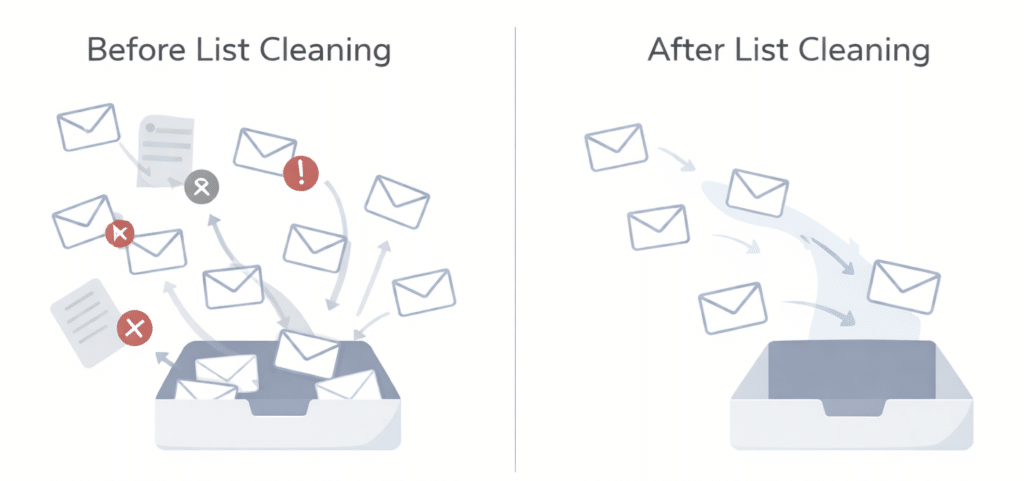
In reality, marketing is the last place any business should cut back—unless they want to go the way of the dodo. When cash flow is slow, you need to reach out to new prospects and retain current customers more than ever. Remember, digital marketing, such as an email campaign, allows you to spend even the tiniest budget more intelligently. Before sending, one practical step is removing known junk and high-risk email addresses that can skew results and damage sender reputation. PureList’s email list cleaning service focuses on cleaning lists so email campaigns are not burdened by addresses that should never be mailed.

5. Falling for the Con

The floundering economy has given birth to more than the Octomom, Kate Gosselin and Michelle Duggar combined—though rather than babies, it has squeezed thousands of kicking and screaming consultants out of its clown car. You can now find these “professionals” everywhere, proclaiming their sales and marketing prowess with all the finesse of a “Buy Here-Pay Here” used car salesman.

Sure, you might find that some may actually know what they are doing, but fall for the con of one who doesn’t and you’ll have no one to blame but yourself. Always lay out clear expectations regarding costs, timelines and results. Check references and ask about the quality and reliability of delivered work. When in doubt, choose a full service marketing company with a proven track record.

Darwin published his theory of evolution in the 1859 book, On the Origin of Species. Recognized as a preeminent scientist and one of history’s most influential men, England gave him a nobleman’s funeral in 1882 and buried him near Isaac Newton in Westminster Abbey. Today, his name lives on in conjunction with acts of the utmost stupidity in the Darwin Awards. Don’t let your marketing become an award nominee or winner. This article is part of our broader resource on email list cleaning and hygiene, which explains how removing junk before sending helps reduce unnecessary risk.

IP Rejection Email 4350587

Do you ever wonder why when sending an email marketing campaign, or receiving an email from another company, some emails end up in the inbox while others find their way directly to the junk or spam folder?

This question is closely tied to how responsibly an email program manages list quality before sending. Factors like who you send to, how often you send, and whether junk and high-risk addresses are removed all influence how mailbox providers interpret trust and intent.

The most important factor in determining whether your email is marked as spam, and ends up in the junk folder, or goes to your subscriber’s inbox is directly related to your sender and IP reputation. While there are other factors, your IP reputation is inevitably the most important. Sender reputation is directly associated with the IP address of the email server you are using to send your email campaigns. One of the most controllable inputs into sender and IP reputation is list quality. Mailing junk, unwanted, or non-performing addresses introduces negative signals that compound over time, which is why list hygiene is treated as a preventative operational step rather than a reactive fix. ISP’s (Internet Service Provider) score a sender’s IP address or reputation by assigning a value or score, weighing various factors related to email marketing activity. They then use their own algorithm or scoring metrics to determine your reputation and if your emails will be destined for the inbox, junk folder or simply rejected. In essence, your sender or IP reputation indicates to an ISP the trustworthiness of the source of the email that is being delivered. What constitutes a trustworthy sender will vary from ISP to ISP, so in order to build a strong sender or IP reputation you’ll need to understand all of the factors that ISP’s look at when determining a score and how or if to deliver your email marketing messages at all.

A sender or IP reputation is built over time. Simply setting up a new IP address and sending your emails from it won’t guarantee that your emails will make it to the inbox. Oftentimes clients don’t understand why emails being sent from a brand new IP address would land in the spam or junk folder. Their rational is usually, “This is a brand new IP. The IP reputation can’t be bad. Why would they send all of our emails to the junk folder?”  A brand new IP with no history of email activity is normally regarded as suspicious by the ISP, because they do not know anything about the IP address that is being used to send the emails. You can think about it the same way banks use credit scores. If you have no credit, payment history or credit score, a bank is less likely to give you credit or loan you money. While if you have a good credit history of paying your bills on time and being diligent about your finances, banks are more likely to lend you money or extend you the credit you’re asking for.

What factors are used in determining your sender and IP reputation?

  1. Spam Complaints – How many users click the spam or junk button when receiving your emails? What percentage of recipients complain about the emails they receive from you and your ever so important IP address?
  2. Clean Email Address – Having a list of email addresses that are valid and deliverable are also a key factor in scoring your IP reputation. A quality email list, will in most cases, allow you to deliver your emails to the user’s inbox. Email List Cleaning is extremely important because it stops you from sending to invalid and unwanted emails. This is not about predicting inbox placement or guaranteeing delivery outcomes. Cleaning focuses on removing categories of addresses that consistently introduce risk—such as spam traps, complainers, and dead emails—before campaigns are sent. Having a high percentage of hard bounces (bad or undeliverable email addresses) is a sure way to let the ISP’s know your list is either old, scrapped, purchased, not optin or simply not maintained. While validating your email list is extremely important, cleaning your email list is equally critical. Sending to spamtraps is a sure way to ensure, even if you did before, you’ll no longer be able to deliver your emails to the users inbox.
  3. Volume of Email being sent – If you normally send to a list of 3,000 emails twice weekly and then decide to buy a list and start sending to 300,000, you’ll normally find out pretty quickly that your emails are being rejected or being sent to the spam folder.
  4. IP Blacklists – Most ISP’s will use some type of external blacklist to see if your IP address is negatively listed for either sending to spam seeds or complaining recipients.
  5. Valid DNS – Ensuring that the DNS is correctly setup for your sending domain and the IP address is validated to allow you to send from it is critical in delivering your emails without any problems. The main DNS records that need to be correctly configured are: A, MX, SPF, Domain Keys (DKIM), and Reverse DNS
  6. Email Content – While the content or keywords in your email is important, most industry experts will agree that it only accounts for approximately 20% of the score determining if an ISP will accept and deliver your email to the inbox or spam folder or outright reject the email being sent.

If you are preparing to send a campaign, a practical way to support sender and IP reputation is removing known junk and high-risk address categories beforehand. PureList’s email list cleaning service focuses on removing these types of addresses so campaigns are not burdened by data that introduces unnecessary risk.

Conclusion – Delivering your Email Marketing to the Inbox

If you have your domain and IP configured properly in DNS, clean and validate your email lists regularly, send to only optin email addresses of your customers or people who have signed up to receive emails from you and don’t send spammy looking emails that will entice a recipient to click the spam button, you should be OK. Following these basic rules is the framework of any responsible email marketer.

This article is part of our broader resource on email list cleaning and hygiene and how removing junk before sending helps reduce unnecessary risk.